



A phone case vending machine can offer hundreds of designs on screen, but the machine only works commercially when the physical blank-case inventory is planned around real device demand. At KeMore, we plan the phone model list, blank case quantities, refill rhythm, machine capacity and launch market as one operating system. Inventory is not an afterthought added after the machine is installed.
Phone Case Vending Machine Inventory Starts With the Device Mix
The first decision is not how many blanks fit inside the cabinet. It is which phone models deserve space. A machine installed in a U.S. mall, a university in Europe, an airport in Southeast Asia and a resort in the Middle East can face very different smartphone ownership patterns. The same stock package will not perform equally well in all four locations.
KeMore normally separates the assortment into three operating groups. Core models are devices with the strongest probability of repeated orders and receive the deepest stock. Secondary models receive controlled quantities because they add useful coverage without consuming too much capacity. Long-tail models are introduced only when local demand justifies the slot.
| Inventory group | Typical role | KeMore stock logic |
|---|---|---|
| Core models | Current iPhone, major Samsung Galaxy and other locally dominant phones | Deeper stock, tighter refill thresholds and stronger safety quantity |
| Secondary models | Recent generations and meaningful regional devices | Moderate depth, reviewed after each refill cycle |
| Long-tail models | Low-frequency or highly regional devices | Small test quantities or off-machine backup stock |
Blank Cases and Digital Designs Should Be Managed Separately
On-demand printing changes the inventory problem. A conventional phone accessory store may carry many finished designs across many phone models. A custom phone case printing machine can keep the design library digital and store compatible blank cases physically. One blank case can become a travel graphic, a photo gift, a school design, a branded theme or a seasonal product after the customer completes the order.
This separation gives KeMore projects more flexibility. Digital artwork can change frequently, while the physical inventory remains concentrated on phone models that customers actually use. That makes it easier to add new visual content without creating a large quantity of finished cases that may never sell.
Machine Capacity Is a Limit, Not a Stock Target
A cabinet may have space for hundreds of blanks, but filling every position at launch can make the assortment less flexible. KeMore treats capacity as the upper operating limit rather than the quantity that must always be loaded. The actual starting stock depends on expected daily orders, the interval between service visits and how concentrated demand is across the supported models.
A location serviced every three or four days can use a leaner stock position because the operator can respond quickly. A machine inside an airport, resort or remote retail environment may need deeper safety stock because replenishment access is less frequent or more restricted. The same number of daily sales therefore produces different inventory requirements in different operating environments.
How We Estimate the Starting Stock
We begin with a practical sales range rather than a perfect forecast. Suppose the location is expected to sell eight cases per day and the machine will be replenished every seven days. That creates roughly 56 expected orders between service visits. KeMore does not spread 56 blanks evenly across every model. We distribute the expected demand by phone family, then add safety quantity to the models most likely to sell repeatedly.
When real operating data becomes available, the next refill changes the mix. A model that repeatedly approaches zero receives more depth. A model that remains nearly untouched receives less. This is how the machine moves from a forecast-based inventory plan to a location-specific inventory system.
iPhone Inventory Needs Generation and Variant Control
iPhone demand is often more concentrated than the wider Android market, but each generation still contains different sizes and variants. Standard, Plus, Pro and Pro Max devices may require different case dimensions and camera openings, so the interface and the blank inventory have to match exactly.
In KeMore deployments, iPhone case inventory planning separates the newest generation, recent mainstream generations and older installed-base demand. The newest phones may need fast updates, mainstream devices usually provide steadier turnover, and older phones remain useful only where local demand continues to justify the stock.
Samsung and Android Require More Regional Weighting
Samsung Galaxy S, Galaxy Z and Galaxy A devices can behave very differently by country. Beyond Samsung, Google Pixel, Xiaomi, Redmi, OPPO, vivo, Huawei, Honor, Motorola and OnePlus add another layer of regional variation. KeMore does not copy one global Android stock list across every project.
A Samsung and Android inventory strategy therefore has to reflect the phones customers actually carry in the target market. High-confidence Android models can receive deeper stock, while uncertain models begin with smaller quantities and expand only when sell-through proves the demand.
Supported Models Must Match Physical Supply
A phone model should not appear in the customer interface unless the project has a validated blank case and a realistic replenishment path for it. Software compatibility by itself does not create commercial availability. KeMore validates case dimensions, camera opening, button placement, print positioning and model naming before a device is added to the active selection list.
This also keeps the user interface easier to navigate. The machine can organize devices by brand, series and model, allowing customers to confirm the correct phone before payment. A clean selection flow reduces wrong orders and unnecessary reprints.
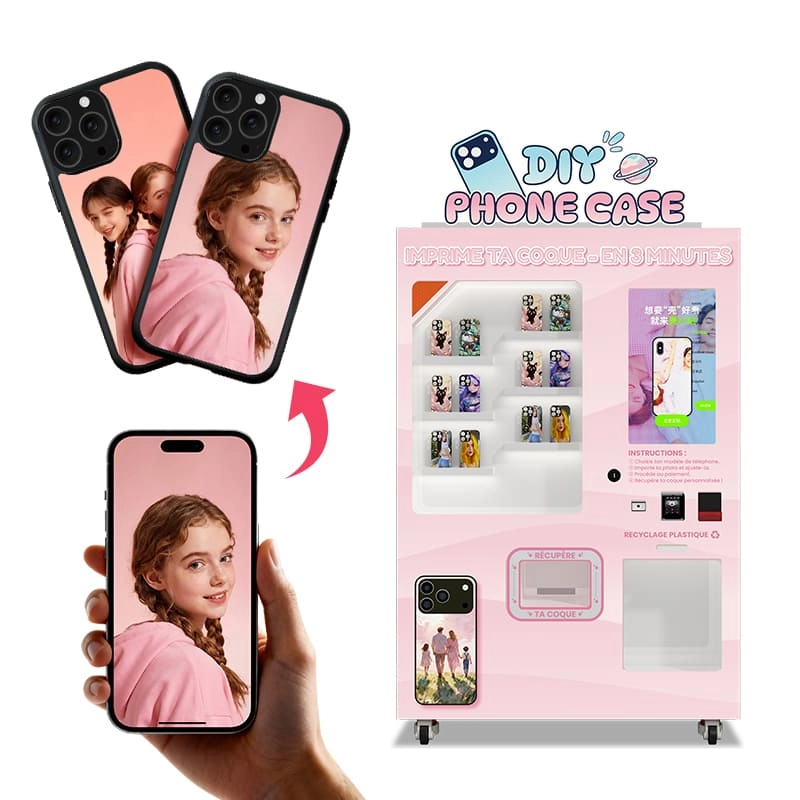
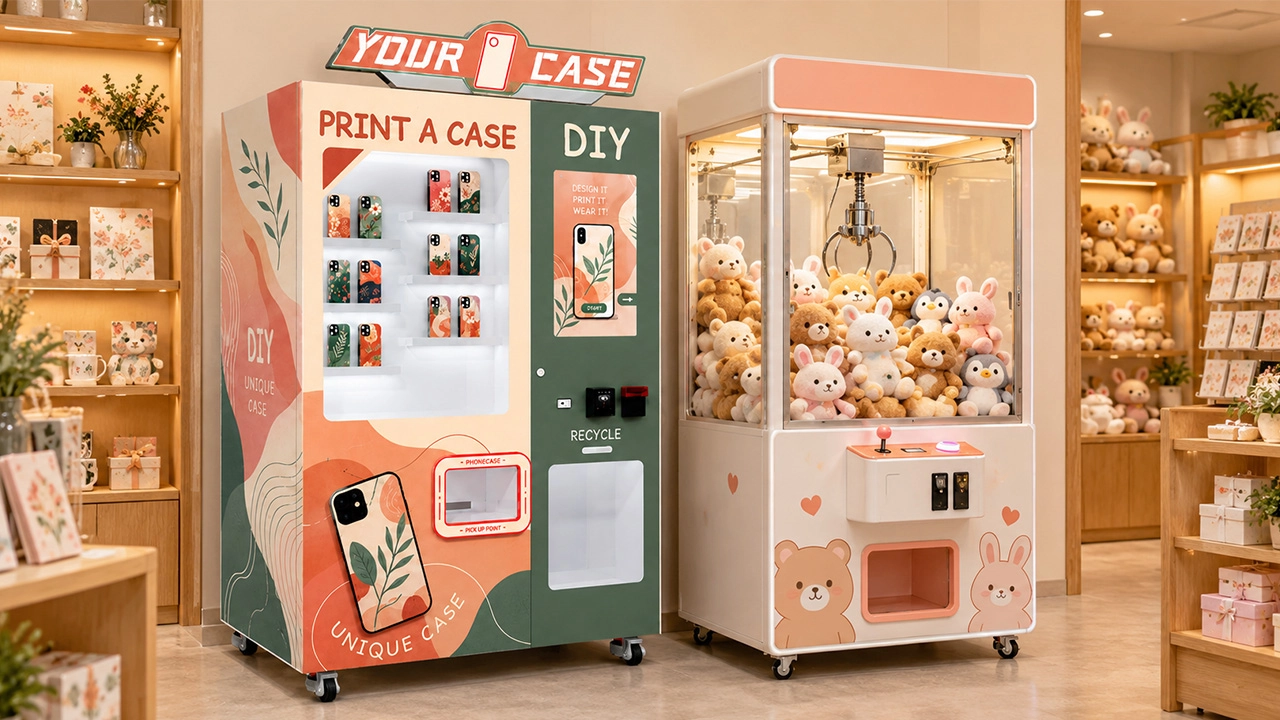
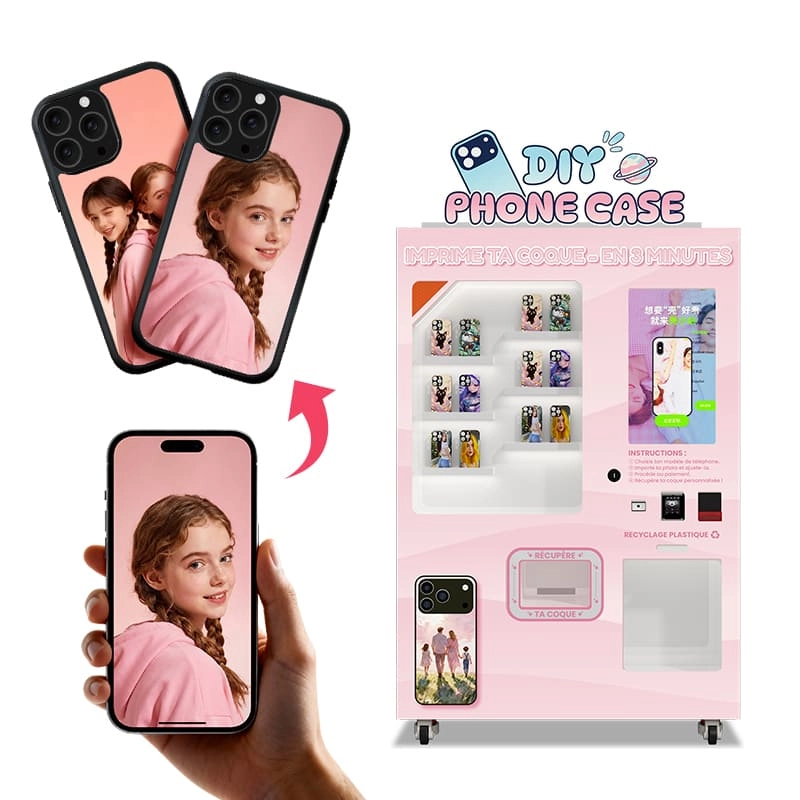
KeMore Custom Phone Case Vending Machine
We configure the machine around the intended market, including phone model coverage, self-service ordering, payment options, printing workflow, blank-case storage and remote management. The first inventory package can be planned together with the machine configuration so the project starts with a model mix that can actually be replenished.
KeMore Custom Phone Case Vending MachineLocation Changes the Model Mix and Refill Depth
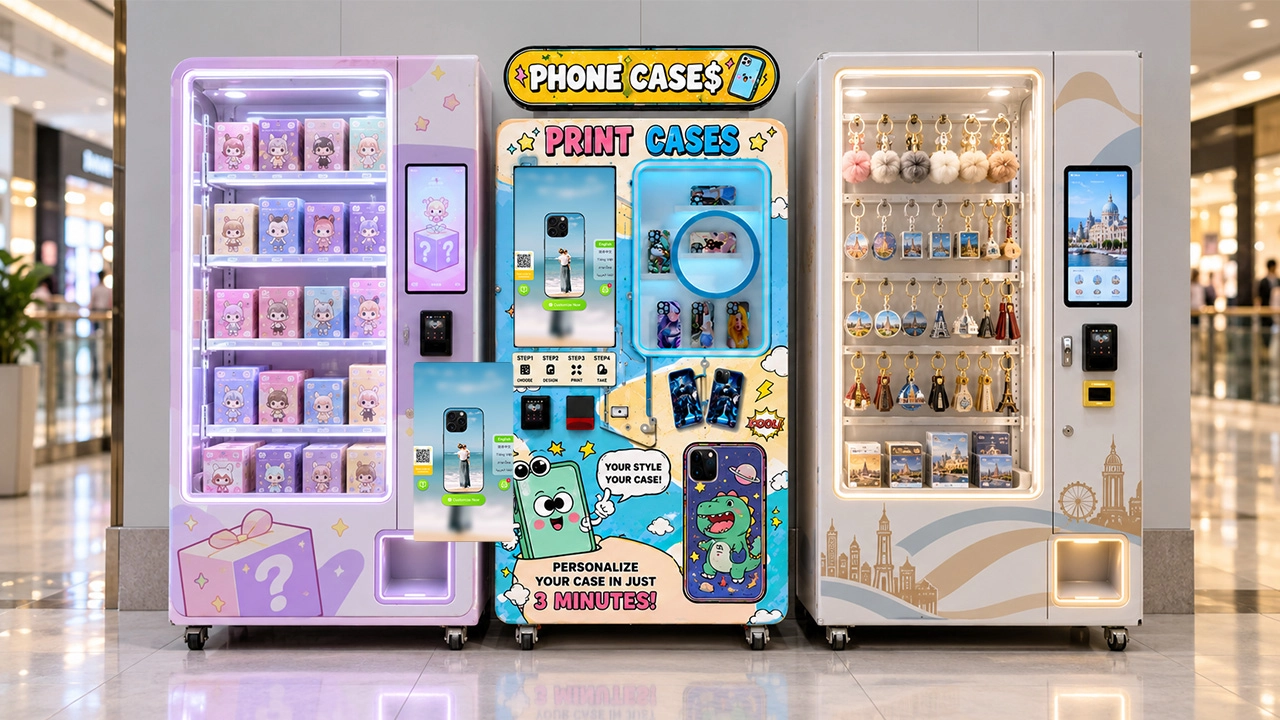
A campus tends to have repeat users and a more concentrated student device mix. Airports can expose the machine to international passengers and therefore need broader phone coverage. Hotels and resorts may have seasonal demand, while phone accessory stores can support a wider model list because customers arrive with a stronger product intention.
These differences are built into KeMore’s application scenarios for self-service phone case retail. Location affects not only customer volume but also dwell time, device diversity, refill access, payment expectations and the type of design content that performs well.
Refill Frequency Determines Safety Stock
Safety stock should be stronger where service lead time is longer. A local mall that can be replenished quickly may operate with lower buffers. A tourist venue with limited service windows needs more protection on fast-moving models. The buffer should be model-specific rather than a fixed percentage added to the whole machine.
KeMore also recommends holding some backup blanks outside the machine for the fastest-moving devices. This allows a service visit to restore availability without forcing every unit of stock to remain inside the cabinet at all times.
New Phone Releases Need a Planned Inventory Transition
Major smartphone launches can shift demand before older stock has fully sold through. We manage that transition by reducing low-turnover older models, reserving physical capacity for the new generation, validating compatible blanks and updating the customer interface when the new device is ready for sale.
The change should be gradual. An older iPhone or Galaxy model can continue to produce meaningful accessory demand even after a new generation appears. Removing it too early can lose sales; keeping too much of it can slow inventory turnover. The correct balance comes from sell-through data rather than release dates alone.
Inventory Data We Review During Operation
- Units sold by phone model and variant
- Models that reach low stock before the scheduled refill
- Selections lost because a compatible blank is unavailable
- Blanks that remain untouched across several service cycles
- Changes after major phone releases
- Differences between locations in a multi-machine network
- Seasonal changes in tourist, campus or retail traffic
Once the machine has enough operating history, KeMore can refine the model mix with much greater confidence. The goal is not to maintain the original launch assortment forever. The goal is to keep the inventory aligned with the real customers using that specific machine.
Phone Case Inventory Should Support the Business Model
A profitable self-service printing project needs more than a large design library or a long compatibility list. The machine has to fulfill the orders customers choose. KeMore uses demand tiers, on-demand printing, controlled blank-case stock and location-specific replenishment to make that fulfillment system practical.
When the phone model list and blank-case quantities are planned before deployment, the operator starts with a structure that can be measured, adjusted and replicated across additional locations.
FAQ
How much inventory does a phone case vending machine need?
The starting quantity depends on machine capacity, expected daily orders, supported phone models and refill frequency. KeMore gives deeper stock to high-demand devices and smaller quantities to secondary or long-tail models.
Does on-demand printing reduce phone case inventory?
It reduces finished-design inventory because artwork can remain digital. The machine still needs compatible blank cases for the supported phone models.
Which phone brands should be stocked first?
Most projects begin with current iPhone models, major Samsung Galaxy devices and selected Android models that match the target market.
How often should the model mix be reviewed?
KeMore recommends reviewing the mix during the first refill cycles and again around major smartphone launches, seasonal traffic changes and noticeable shifts in sell-through.


 No. 28 Xinhuan Village Road, Xinshuikeng Village, Dalong Street, Panyu District, Guangzhou City
Facebook
Instagram
LinkedIn
YouTube
Tik Tok