



Hong Kong Exhibition Concludes: Four Self-Service Solutions from Kemore
Hong Kong Global Sources Phase 2 has come to a close. At the exhibition, Kemore showcased four types of equipment designed for different retail and customization needs: a phone case printing vending machine, a self-service garment printing machine, an automatic phone screen protector applicator, and a desktop multifunctional UV printer.
Although these machines serve different purposes, they share a practical focus: helping businesses explore product customization and automated services in different commercial environments.
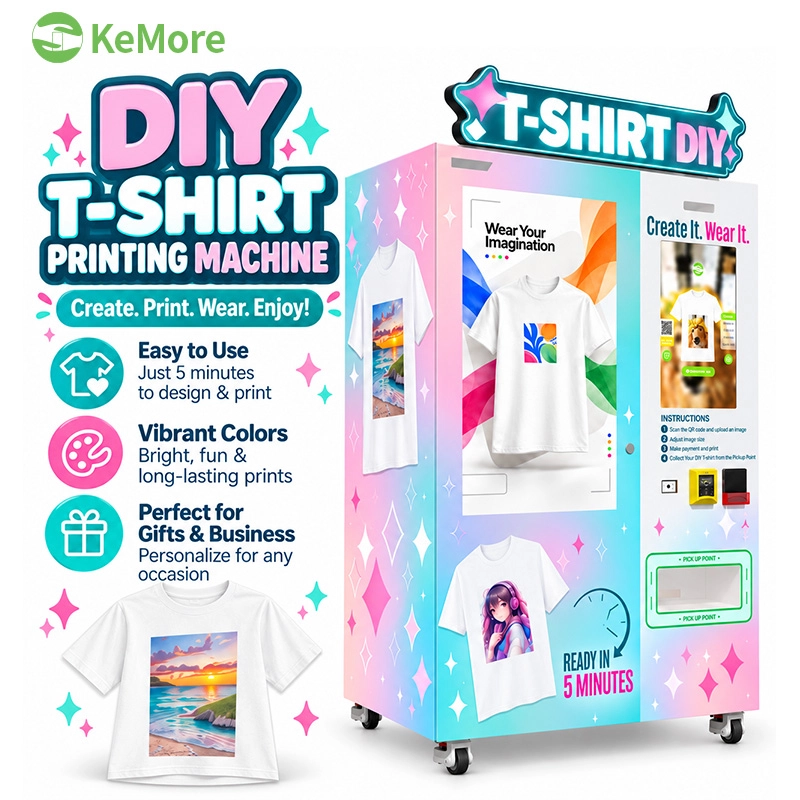
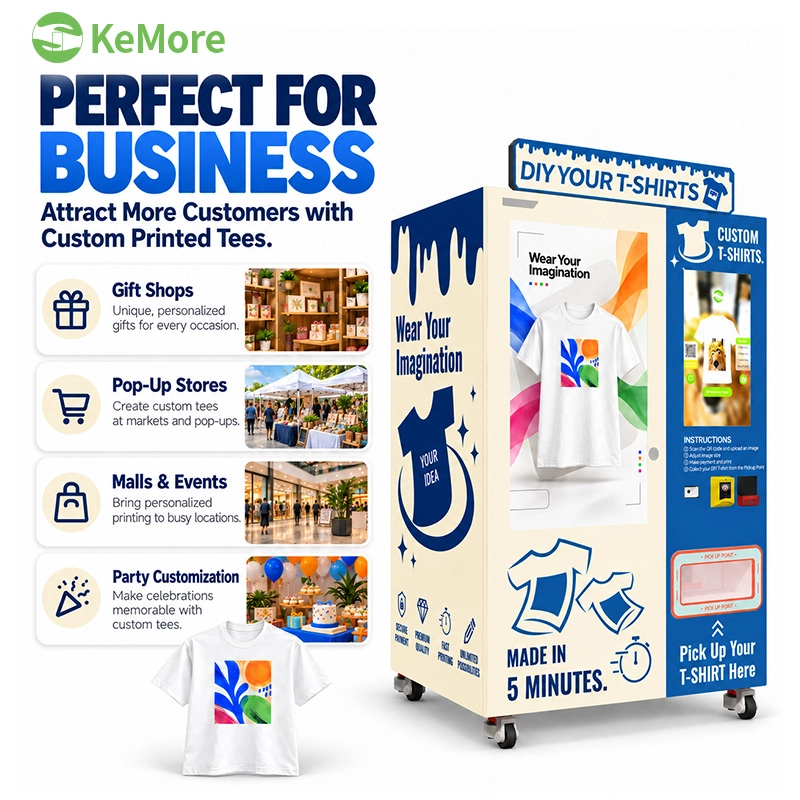
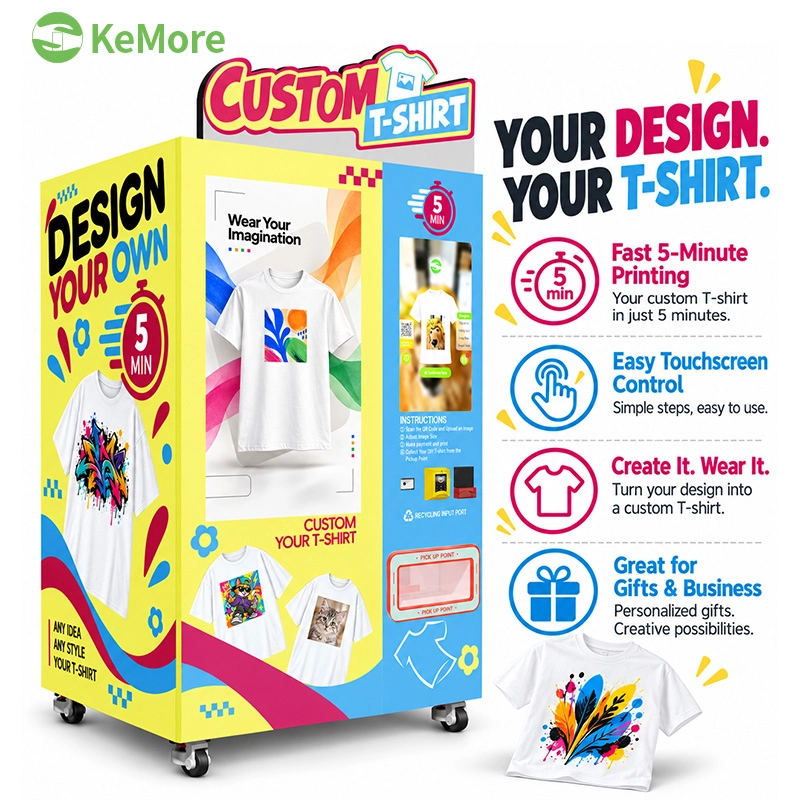
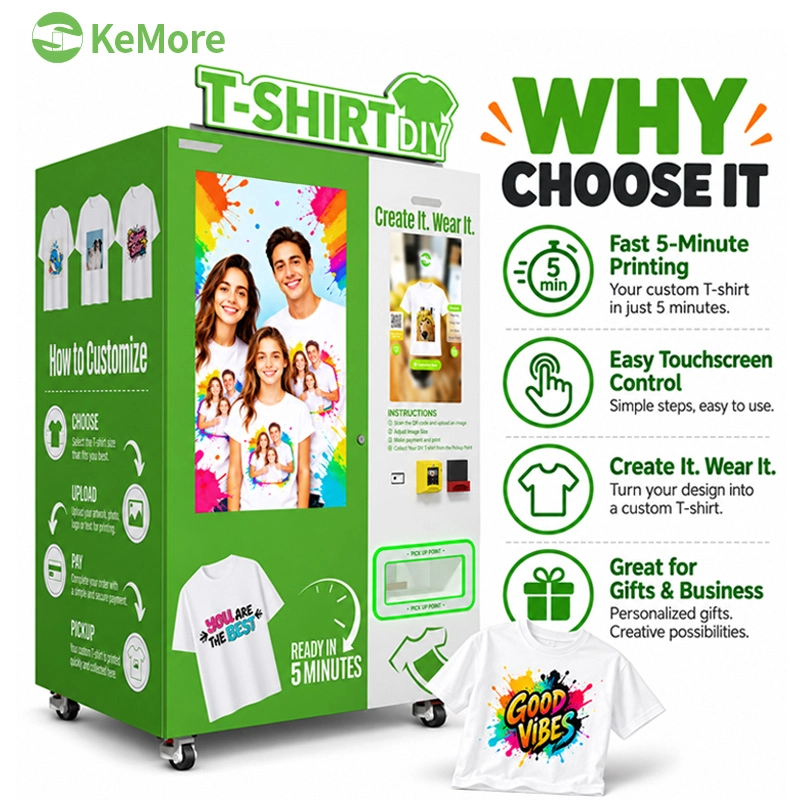
The phone case printing vending machine supports personalized phone accessories, while the garment printing machine focuses on apparel customization. The screen protector applicator is designed for mobile phone protection services, and the desktop UV printer can support different customized products when the materials and fixtures are compatible.
For retailers, distributors, and project operators, choosing equipment involves more than comparing features. It also means understanding the target customers, installation environment, operating costs, and ongoing maintenance requirements.
This article reviews the four machines showcased by Kemore and explains their potential applications and the key factors businesses should consider before making a purchase.

1. Four Self-Service Machines and What They Can Do
1.1 Phone Case Printing Vending Machine: Personalized Accessories on Demand
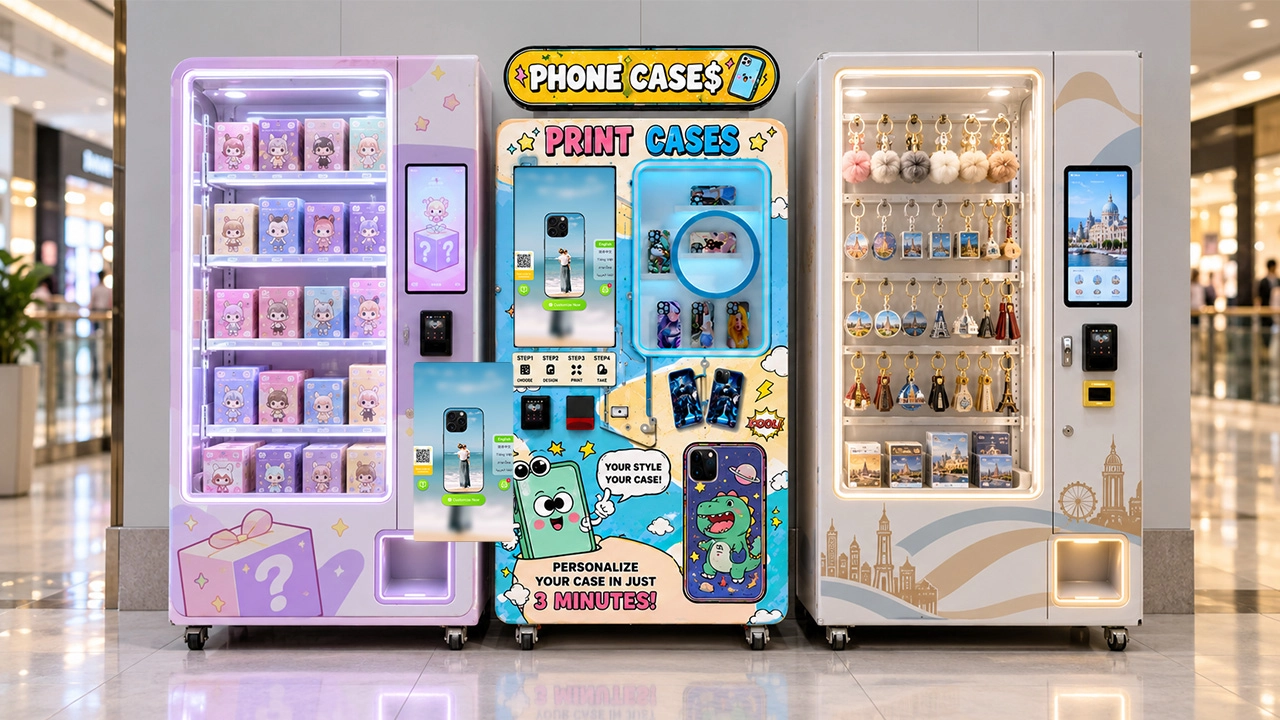
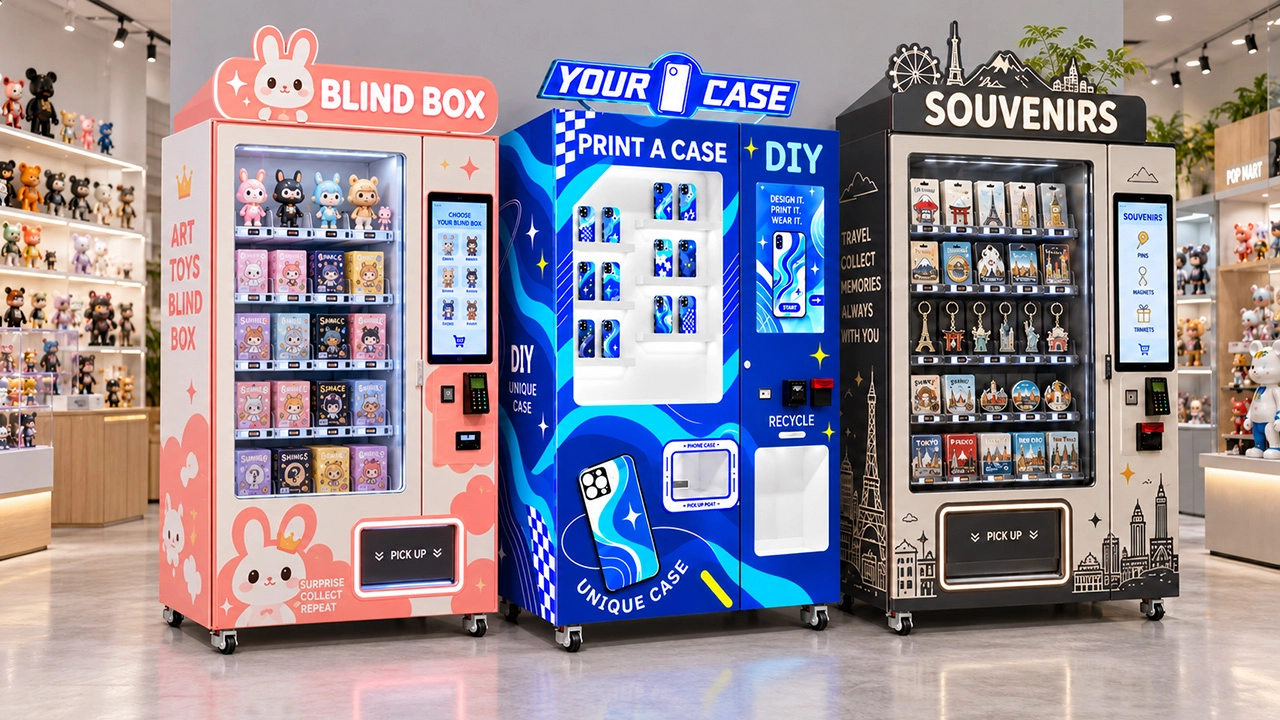
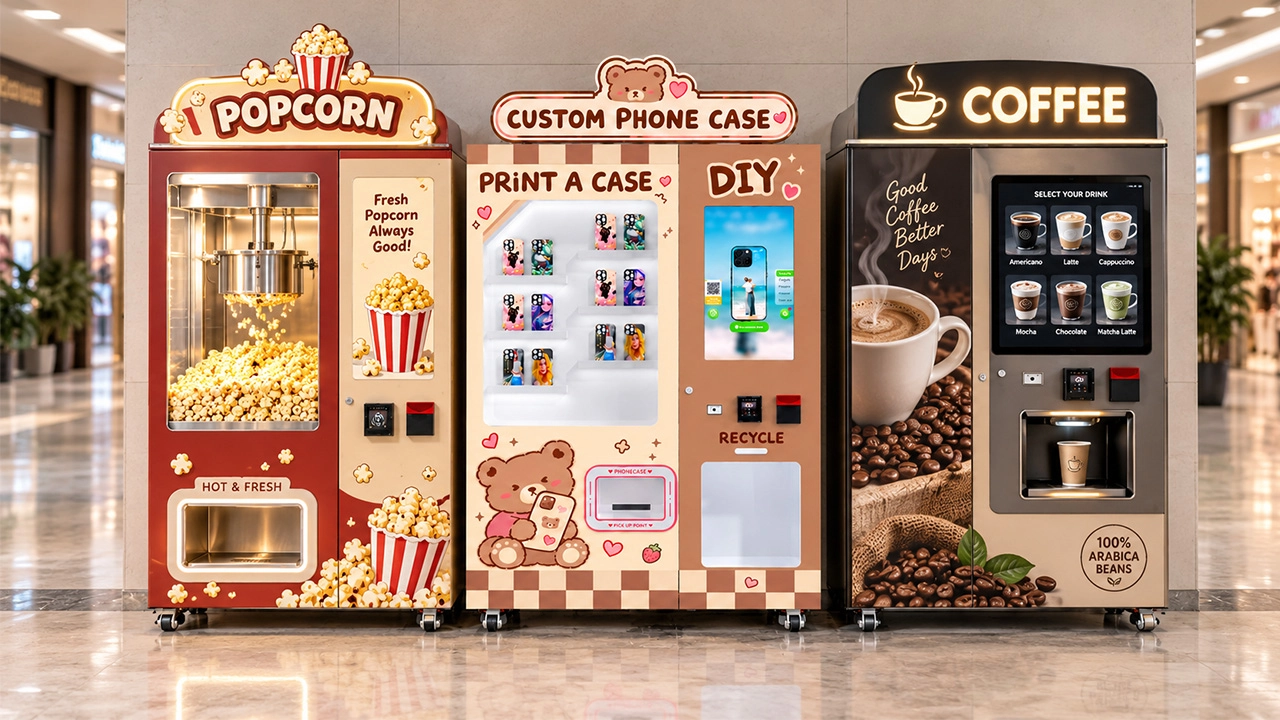
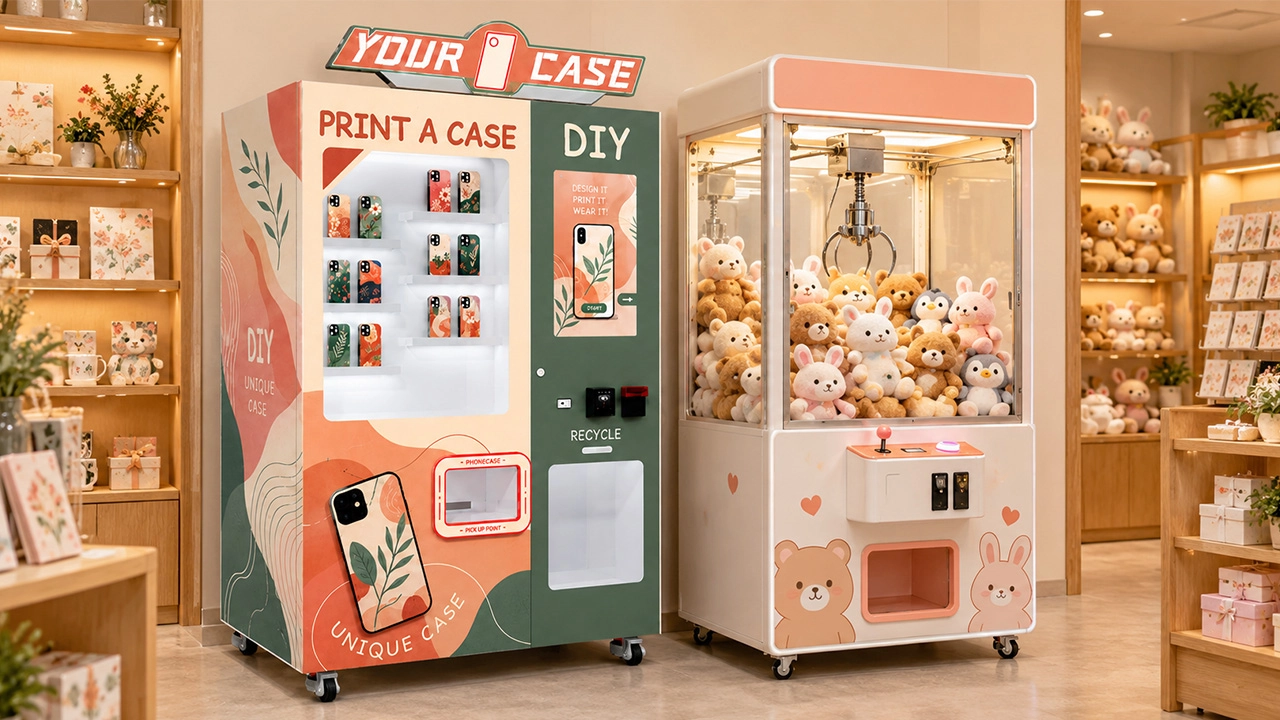
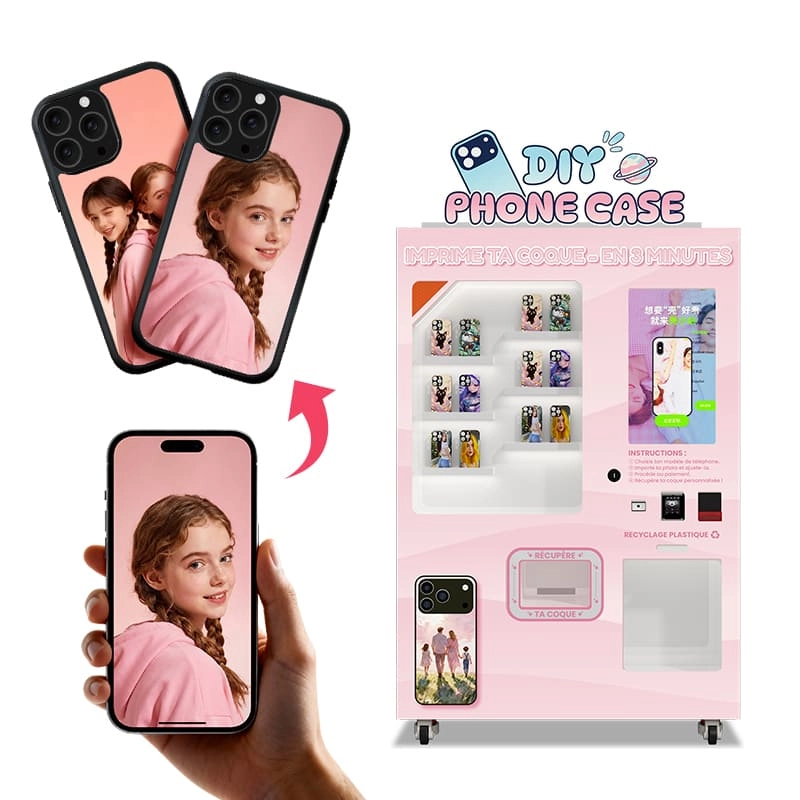
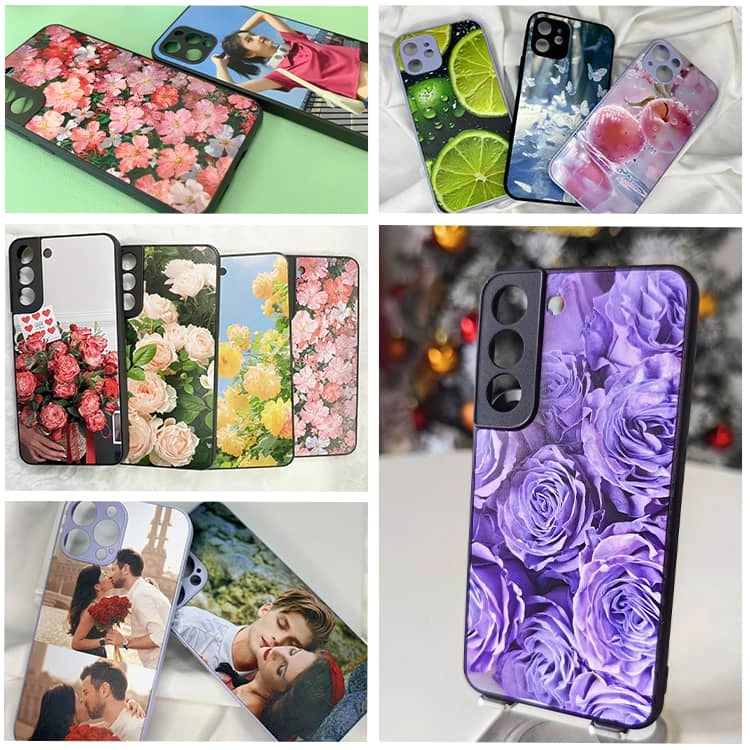
Phone cases are widely available, but standard designs do not always match every customer's preferences. A phone case printing vending machine offers another option by allowing customers to personalize a compatible phone case with their own images or designs.
Depending on the machine's configuration, customers can select a phone model, upload and adjust an image, complete payment, and collect the printed case.
Selected Kemore models can print a phone case in approximately three minutes. Actual printing time depends on the specific model and configuration.
Potential application scenarios include:
|
Location |
Potential application |
Factors to consider |
|
Shopping malls |
Personalized phone accessories |
Foot traffic, visibility, rental costs |
|
Tourist attractions |
Cases featuring travel photos or local designs |
Visitor demand, design relevance, seasonal traffic |
|
Entertainment venues |
Customized products for visitors |
Dwell time and ease of use |
|
Retail spaces targeting younger consumers |
More design choices for phone accessories |
Phone model coverage and inventory |
For operators, printing speed is only one part of the business equation. Phone model compatibility, case inventory, available designs, location, and customer demand can all influence the operating results.
Before launching a phone case printing vending machine project, businesses should evaluate their target market and location, then choose equipment and inventory that match local needs.

1.2 Self-Service Garment Printing Machine: Expanding Apparel Customization
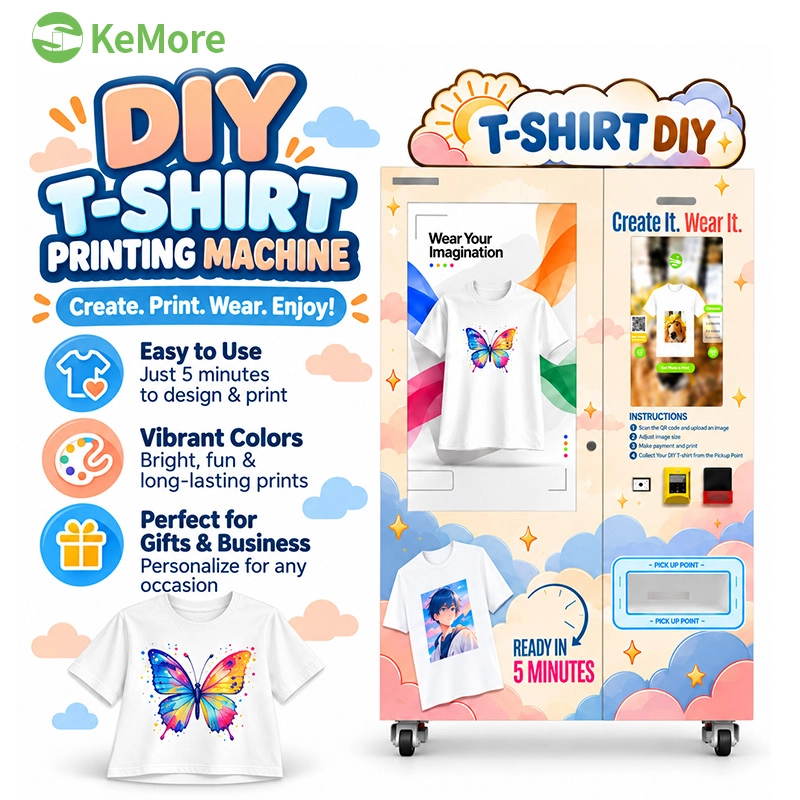
Garment customization can serve a range of needs, from personalized clothing to event merchandise and customized gifts. For businesses looking to expand their apparel offerings, a garment printing machine may be worth considering.
The supported fabrics, garment types, and printing methods depend on the specific equipment and configuration.
Potential applications include:
|
Application |
Typical requirement |
What to confirm |
|
Personalized apparel |
Printing custom designs on garments |
Supported garment and fabric types |
|
Event merchandise |
Producing clothing with event-related designs |
Printing method and production workflow |
|
Customized gifts |
Apparel designed for individuals or groups |
Product compatibility and operating process |
|
Retail customization services |
Offering customers different design options |
Equipment configuration and consumables |
For businesses serving event organizers, production workflow and output requirements may be particularly important. For retail services targeting individual customers, design selection and ease of use may deserve more attention.
Before purchasing a self-service garment printing machine, confirm the supported fabrics, printing process, operating requirements, and expected production volume. These details help determine whether the equipment matches the intended business model.

1.3 Automatic Phone Screen Protector Applicator: Supporting Mobile Accessory Retail
Screen protector installation is a common service in the mobile phone accessories market. For businesses already selling phones, cases, or protective films, an automatic phone screen protector applicator may complement their existing product range.
The machine is designed to assist with the screen protector application process. Its specific functions and operating workflow depend on the model.
Potential installation locations include:
-
Mobile phone retail stores
-
Phone accessory shops
-
Electronics retail environments
-
Businesses offering screen protector installation services
Before selecting a machine, businesses should review the following points:
|
Checkpoint |
Why it matters |
|
Phone model compatibility |
Helps ensure the machine supports the devices customers use |
|
Screen protector specifications |
Confirms that the available films match the intended applications |
|
Operating workflow |
Clarifies whether staff assistance is required |
|
Consumable supply |
Helps avoid interruptions caused by stock shortages |
|
Maintenance and after-sales support |
Provides clarity on routine servicing and troubleshooting |
For mobile retailers, the main question is whether the machine fits their existing customer base and service process. Equipment should support the business rather than add unnecessary complexity.
1.4 Desktop Multifunctional UV Printer: More Options for Product Customization
Businesses that want to customize more than one product category may also consider a desktop multifunctional UV printer.
Depending on the model, supported materials, print dimensions, and compatible fixtures, UV printing can be used to create designs on different suitable items.
Potential product categories include:
-
Phone cases and compatible accessories
-
Personalized gifts
-
Decorative products
-
Other items that meet the machine's material and size requirements
For a customization studio or gift business, a multifunctional UV printer may provide a way to explore different product categories using compatible setups.
However, multifunctional does not mean that every material or object can be printed. Before purchasing, confirm the supported materials, printing dimensions, fixture requirements, and expected print quality.
Businesses should start with a list of products they intend to make and check whether the machine can handle them. This approach is more practical than selecting equipment based only on the number of functions advertised.
2. Comparing the Four Machines: Which Solution Fits Your Business?
The four machines serve different purposes. Comparing them by application can help businesses narrow down their options.
|
Equipment |
Main function |
Potential business applications |
Key selection factors |
|
Phone case printing vending machine |
Personalized phone case printing |
Phone accessories, customized retail products |
Phone model coverage, case inventory, location |
|
Self-service garment printing machine |
Apparel customization |
Custom clothing, event merchandise, personalized gifts |
Fabric compatibility, printing method, workflow |
|
Automatic phone screen protector applicator |
Assisting with screen protector application |
Mobile phone stores, accessory retailers |
Phone compatibility, film specifications, consumables |
|
Desktop multifunctional UV printer |
Printing on compatible products |
Customization studios, gift businesses |
Material compatibility, print dimensions, fixtures |
The right choice depends on the business objective.
-
For personalized phone accessories: Evaluate phone case printing equipment, including supported phone models and inventory requirements.
-
For apparel customization: Focus on garment compatibility, printing methods, and production workflow.
-
For mobile phone accessory services: Check whether a screen protector applicator fits the existing service process.
-
For multiple customized product categories: Assess the actual material and fixture compatibility of a desktop multifunctional UV printer.
These machines are not interchangeable. Defining the products and services a business wants to offer is usually the most useful first step in equipment selection.
3. Where Can Self-Service Printing Machines Be Used?
The suitability of a machine depends on more than its technical specifications. The installation location, customer profile, available space, and operating conditions also matter.
|
Location |
Equipment worth evaluating |
Key considerations |
|
Shopping malls |
Phone case printing vending machine |
Customer profile, visibility, rental costs |
|
Tourist attractions |
Phone case printing vending machine |
Visitor demand, local designs, seasonal traffic |
|
Events and entertainment venues |
Phone case or garment printing machine |
Event theme, operating hours, on-site management |
|
Mobile phone retail stores |
Phone case printing machine or screen protector applicator |
Existing customers, accessory sales, service workflow |
|
Customization studios |
Garment printing machine or desktop UV printer |
Product range, material compatibility, production needs |
These are potential applications rather than guaranteed business outcomes. A machine that suits one location may not perform the same way elsewhere.
For example, a phone case printing vending machine at a tourist attraction may benefit from locally themed designs. However, the project still depends on visitor interest, machine visibility, purchasing behavior, and the time available to use the equipment.
Businesses should evaluate the location and target customers together before committing to a project.
4. Five Things to Check Before Buying a Self-Service Printing Machine
Once a business has identified a potential application, the next step is to determine whether the equipment fits its market and operating conditions.
4.1 Is There Real Demand in the Target Market?
Start by identifying the customers the machine is intended to serve.
Tourists may be interested in destination-themed souvenirs. Mobile phone users may look for compatible accessories and protective services. Customers buying customized gifts may have different expectations regarding design, materials, and turnaround time.
Market research, customer interviews, and small-scale testing can help businesses assess demand before committing to a larger investment.
4.2 Does the Equipment Match the Intended Application?
Specifications vary by model. Before purchasing, confirm the actual product range, compatible materials, dimensions, operating process, and available functions.
|
Equipment |
Specifications to check |
|
Phone case printing vending machine |
Supported phone models, case types, printing time |
|
Self-service garment printing machine |
Compatible fabrics, printing method, workflow |
|
Phone screen protector applicator |
Phone compatibility, film specifications, consumables |
|
Desktop multifunctional UV printer |
Print dimensions, material compatibility, fixtures |
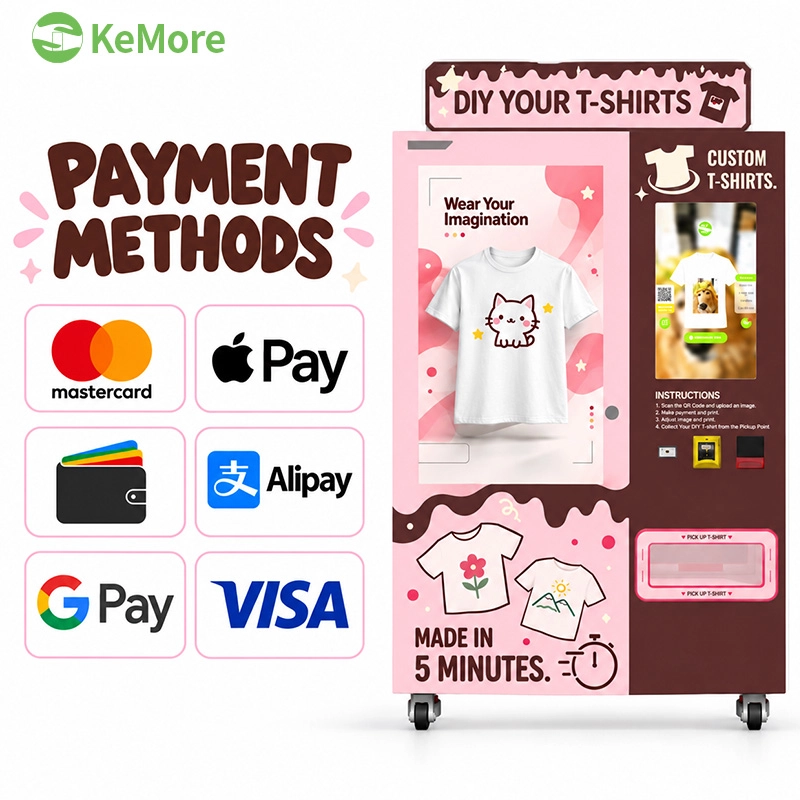
For international projects, businesses should also check power requirements, language options, payment methods, and local operating conditions.
4.3 What Are the Total Operating Costs?
The purchase price is only one part of a project's financial requirements. Transportation, installation, consumables, rental, maintenance, and marketing may also contribute to ongoing expenses.
|
Cost category |
Examples |
|
Initial investment |
Equipment purchase, transportation, installation |
|
Consumables |
Phone cases, screen protectors, garments, ink, compatible materials |
|
Location |
Rent, management fees, site-related expenses |
|
Maintenance |
Routine servicing, spare parts, repairs |
|
Labor |
Restocking, inspections, maintenance, on-site assistance |
|
Marketing |
Advertising, promotions, customer acquisition |
Revenue estimates should be based on realistic assumptions about local pricing, expected sales, operating days, and actual site conditions. Overly optimistic sales projections can make a project appear more attractive than it is.
4.4 How Much Daily Management Is Required?
Different machines have different operating procedures, restocking needs, and maintenance requirements. A machine that supports self-service operation may still require routine checks and occasional staff assistance.
Before purchasing, ask the supplier about daily operating tasks, consumable replenishment, cleaning, troubleshooting, and the level of assistance required during normal use.
These details help businesses plan staffing and estimate the time needed to manage the equipment.
4.5 What After-Sales Support Is Available?
After-sales service is particularly important for businesses purchasing equipment for overseas markets or multiple locations.
Before placing an order, clarify whether the supplier offers:
-
Installation guidance and operator training
-
Technical troubleshooting
-
Spare parts and consumable supply
-
Software updates and technical assistance
-
Clear after-sales response procedures
For international installations, it is also useful to confirm shipping arrangements, local electrical requirements, language options, and payment integration needs.
Understanding the available support helps businesses prepare for equipment operation after delivery.
5. Exploring Self-Service Equipment Solutions with Kemore
The four machines showcased by Kemore at Hong Kong Global Sources Phase 2 address different business needs, from personalized phone accessories and apparel customization to screen protector application and multifunctional UV printing.
For businesses considering a self-service retail or customization project, equipment selection can begin with three questions:
|
Planning question |
What to define |
|
Who are the target customers? |
Customer profile and local market demand |
|
What products or services will be offered? |
Product categories and customization requirements |
|
How will the equipment be operated? |
Installation location, consumables, costs, and after-sales support |
Kemore offers self-service printing equipment for different product categories and applications. Specific models, functions, and compatibility should be confirmed according to each project's requirements.
Whether a retailer wants to expand its product range or a distributor is evaluating equipment for a new market, defining the business requirements first can make the selection process more focused.
If you are looking for a phone case printing vending machine, garment printing machine, phone screen protector applicator, or desktop multifunctional UV printer, contact Kemore to discuss the available models and relevant specifications.
6. Looking Ahead After Hong Kong Global Sources Phase 2
Hong Kong Global Sources Phase 2 has concluded, but discussions about equipment applications and market needs can continue beyond the exhibition.
The four machines showcased by Kemore address different areas of customization and retail services. For businesses exploring these solutions, the next step is to identify their target customers, assess the installation environment, and compare equipment specifications with actual operating requirements.
Thank you to all the visitors and business partners who connected with Kemore at the exhibition. We look forward to continuing these conversations and exploring future opportunities together.
Interested in self-service printing equipment? Contact Kemore to learn more about available models and discuss a solution for your market.

 No. 28 Xinhuan Village Road, Xinshuikeng Village, Dalong Street, Panyu District, Guangzhou City
Facebook
Instagram
LinkedIn
YouTube
Tik Tok