



Discover how customized consumption is reshaping unattended retail. Explore personalization, interactive shopping, and self-service phone case printing as emerging retail opportunities.
From Buying Products to Making Them: How Consumer Behavior Is Changing in Unattended Retail
- Introduction: When Buying a Product Becomes More Than a Transaction
- 1. Why Are Consumers Moving from Buying Ready-Made Products to Creating Their Own?
- 1.1 Standard Products vs. Personalized Products
- 1.2 From Selecting Products to Participating in Design
- 1.3 The Creation Process Can Become Part of the Shopping Experience
- 2. Why Is Unattended Retail Exploring Customization and Interactive Experiences?
- 2.1 From Pre-Stocked Products to On-Demand Customization
- 2.2 From Completing a Transaction to Creating an Interaction
- 2.3 Personalized Products Can Create Opportunities for Social Sharing
- 3. Self-Service Phone Case Printing: An Example of Experiential Unattended Retail
- 3.1 Let Customers Create Their Own Phone Case Designs
- 3.2 A Simple Workflow from Image Upload to Collection
- 3.3 What Value Can This Model Offer?
- 4. How Can Operators Evaluate a Customized Unattended Retail Business?
- 4.1 Validate Local Demand Before Scaling Up
- 4.2 Make the Self-Service Process Easy to Understand
- 4.3 Track the Right Operating Metrics
- 5. Will Experiential Unattended Retail Replace Traditional Vending Machines?
- 6. The Future of Unattended Retail: More Ways to Meet Consumer Needs
Introduction: When Buying a Product Becomes More Than a Transaction
For years, vending machines have focused on one simple goal: helping consumers purchase products quickly and conveniently. Customers choose an item, make a payment, and collect their purchase. The process is designed to be fast and straightforward.
However, consumer expectations are evolving in some retail settings. Beyond purchasing ready-made products, some shoppers are looking for more personalized options and opportunities to participate in the shopping experience.
Customized phone cases are a good example. Instead of choosing a design from a shelf, customers can upload their own photos or artwork and use a self-service phone case printing machine to create a product that reflects their personal style.
This shift raises an important question for retailers and unattended retail operators: Could the opportunity lie not only in selling products, but also in letting customers participate in creating them?
To understand this trend, it helps to look at the differences between traditional vending, customized consumption, and experiential retail.

1. Why Are Consumers Moving from Buying Ready-Made Products to Creating Their Own?
Standardized products remain essential in retail. They are convenient, familiar, and often available at predictable prices. However, they cannot always satisfy consumers who want something more personal.
In certain product categories, customization gives customers more control over the final result.
1.1 Standard Products vs. Personalized Products
Consider the difference between purchasing a ready-made phone case and designing one using a self-service printing machine.
|
Factor |
Ready-Made Products |
Customized Products |
|
Product selection |
Choose from existing designs |
Personalize the design |
|
Customer involvement |
Mainly selecting and purchasing |
Participating in the design process |
|
Product appearance |
Usually follows predefined styles |
Can reflect individual preferences |
|
Shopping experience |
Focuses on convenience |
Combines purchasing with participation |
|
Potential use cases |
Everyday purchases |
Gifts, personal accessories, and souvenirs |
This does not mean consumers are abandoning standard products. Rather, customized products offer an additional option for shoppers who value individuality.
For retailers, the practical question is whether the target audience is interested enough in personalization to support a viable business model.
1.2 From Selecting Products to Participating in Design
A self-service phone case printing machine illustrates how this change can work in practice.
Instead of choosing only from pre-printed designs, customers can follow a simple process to create their own phone cases.
Typical customer journey:
Choose a language and phone model → Upload an image → Adjust the design → Make a payment → Print the phone case → Collect the finished product
The customer is no longer simply selecting an item from existing inventory. They are taking part in the creation process.
When the interface is easy to understand and the workflow is smooth, this approach can make customization more accessible in physical retail locations.
1.3 The Creation Process Can Become Part of the Shopping Experience
Traditional retail generally focuses on the product and the transaction. Experiential retail also considers what customers do and feel along the way.
For example, customers using a phone case printing machine can upload a photo, adjust its position, confirm the design, and watch the equipment produce the finished case.
The process makes the transformation from a digital image to a physical product visible to the customer.
For some shoppers, this participation adds value to the purchase. The appeal comes not only from owning the finished product, but also from having a role in creating it.
2. Why Is Unattended Retail Exploring Customization and Interactive Experiences?
One of the main advantages of unattended retail is that customers can complete transactions with limited or no direct staff assistance.
As self-service technology develops, some machines are moving beyond the sale of ready-made products. They can also provide services or produce customized items on demand.
This creates a different retail proposition: the machine becomes both a sales point and a way to deliver a service or experience.
2.1 From Pre-Stocked Products to On-Demand Customization
Traditional vending machines generally rely on products prepared in advance. If a customer wants a design that is not available, the machine may not be able to meet that demand.
Customized self-service equipment offers another approach. The base product and necessary consumables are stocked in advance, while the final design can be selected by the customer at the time of purchase.
|
Comparison Factor |
Traditional Unattended Retail |
Customized Unattended Retail |
|
Product format |
Pre-made products |
Pre-made or customized products |
|
Customer involvement |
Selection and payment |
Selection, design, and payment |
|
Inventory requirements |
Finished products in different variations |
Base products, consumables, and compatible components |
|
Main operational focus |
Stock replenishment and sales |
Equipment reliability, production efficiency, and consumable management |
|
Customer value |
Convenience and quick access |
Convenience plus personalization |
On-demand customization does not eliminate inventory management. Operators still need sufficient blank products, printing materials, and compatible accessories.
The difference is that they may not need to prepare every possible finished design in advance.
Whether this approach reduces inventory pressure depends on the product category, the range of available designs, demand patterns, and the way the machine is operated.
2.2 From Completing a Transaction to Creating an Interaction
In a conventional vending experience, the interaction is usually brief: select, pay, and collect.
With a customized self-service machine, customers may spend more time choosing images, adjusting designs, and following the production process.
A self-service phone case printing machine combines these activities in one location. Customers can personalize a product without needing a traditional in-store printing counter.
This model may be worth exploring in locations where visitors have time to browse or participate in an activity, such as shopping malls, entertainment venues, and tourist attractions.
However, the suitability of each location depends on factors such as foot traffic, customer demographics, available space, payment preferences, and operating costs.
2.3 Personalized Products Can Create Opportunities for Social Sharing
Customized products often have a personal connection. A phone case featuring a favorite photograph, a travel memory, or an original design may feel more meaningful to its owner than a standard product.
Some customers may choose to photograph the printing process or share the finished product on social media.
For operators, this creates a potential opportunity to extend the customer experience beyond the physical location.
However, social sharing should not be treated as a guaranteed outcome. The appeal of the design, the convenience of the process, and the customer's willingness to share all influence whether this happens.
A practical approach is to observe how customers interact with the machine and identify which designs or experiences generate genuine interest.
3. Self-Service Phone Case Printing: An Example of Experiential Unattended Retail
Self-service phone case printing combines personalized design, on-site production, and automated purchasing. It provides a practical example of how customized consumption can be integrated into an unattended retail environment.
3.1 Let Customers Create Their Own Phone Case Designs
With a traditional retail model, customers usually select from phone cases that have already been manufactured and printed.
A self-service phone case printing machine offers another option. Depending on the machine configuration, customers can select their phone model, upload an image, and adjust the design before confirming their order.
The machine then prints the selected design onto a compatible phone case.
This approach gives customers more control over the appearance of the finished product while allowing operators to offer a personalized service in a physical retail setting.
For locations that attract consumers interested in accessories, gifts, or creative activities, this may provide an additional product offering worth testing.
3.2 A Simple Workflow from Image Upload to Collection
A typical self-service phone case printing process includes the following steps:
|
Step |
Customer Action |
|
1 |
Select the interface language and phone model |
|
2 |
Scan a QR code and upload an image |
|
3 |
Adjust the image position, size, or layout |
|
4 |
Complete payment using an available payment method |
|
5 |
Wait while the machine prints the phone case |
|
6 |
Collect the finished product |
Depending on the machine model and operating conditions, printing one phone case can take approximately three minutes.
For operators, printing speed is only one part of the evaluation. Other important considerations include interface usability, payment convenience, equipment stability, and the machine's ability to handle demand during busy periods.
A short, clear workflow can help customers complete their orders independently and reduce the need for staff assistance.
3.3 What Value Can This Model Offer?
Personalization
Customers can use their own photos or preferred artwork to create a phone case that matches their individual style.
Customer participation
The process allows customers to take part in designing the product rather than simply choosing a finished item.
On-site production
The final design can be determined after the customer places an order, rather than requiring operators to prepare every possible design in advance.
These features make self-service phone case printing one possible application of experiential unattended retail.
For businesses considering this model, the next step is to evaluate local demand, the suitability of the installation site, consumable requirements, equipment performance, and overall operating costs.

4. How Can Operators Evaluate a Customized Unattended Retail Business?
Customized self-service equipment may create new retail opportunities, but it is not automatically suitable for every market or location.
Before purchasing equipment or expanding a deployment, operators should validate demand and understand the practical requirements of running the business.
4.1 Validate Local Demand Before Scaling Up
Different locations attract different types of customers.
For example:
-
Shopping malls: Customers may be interested in personalized accessories and interactive shopping activities.
-
Tourist attractions: Personalized souvenirs may appeal to visitors looking for products connected to a trip or a memorable occasion.
-
Entertainment venues: Customization may complement other activities, depending on the audience and location.
These are potential use cases rather than guaranteed sources of demand.
Operators can begin by evaluating the target audience, observing customer behavior, and testing whether people are willing to use the machine and pay for the customized product.
A smaller-scale trial can help identify popular designs, common customer questions, and operational challenges before a larger investment is made.
4.2 Make the Self-Service Process Easy to Understand
A self-service machine needs to guide customers through the process without requiring continuous staff assistance.
Important elements include:
-
Clear language options
-
An intuitive phone model selection process
-
A straightforward image upload function
-
Easy-to-use design adjustment tools
-
Familiar and supported payment methods
-
Clear printing status and collection instructions
If customers struggle with one step, they may abandon the purchase even when they like the product.
Operators should pay attention to where customers hesitate, ask for help, or fail to complete an order. Improving these steps may be more useful than simply adding more functions to the interface.
4.3 Track the Right Operating Metrics
Equipment usage alone does not tell the full story. Operators need to understand whether the machine is generating orders, meeting customer needs, and operating within a sustainable cost structure.
|
Metric |
What It Helps Measure |
|
Machine usage |
Whether customers are willing to try the service |
|
Completed orders |
The level of actual purchasing activity |
|
Order conversion rate |
How effectively customer interest turns into purchases |
|
Production time |
The machine's efficiency and potential peak-hour capacity |
|
Popular designs and phone models |
Which products and consumables deserve more attention |
|
Revenue and operating costs |
Whether the business model is financially viable |
|
Customer feedback and operational issues |
Where the process or equipment needs improvement |
These metrics should be reviewed together rather than in isolation.
For example, high usage with relatively few completed orders may indicate problems with the design process, payment options, or pricing. Strong order numbers may still need to be evaluated against consumable costs, maintenance, rent, and other operating expenses.
By reviewing actual performance data, operators can make better-informed decisions about product selection, machine placement, and future expansion.
5. Will Experiential Unattended Retail Replace Traditional Vending Machines?
Customized unattended retail is better understood as an additional business model than as a complete replacement for traditional vending.
Different machines serve different customer needs. A conventional vending machine may be more suitable when shoppers want a quick purchase, while a customization machine may be worth considering when personalization and participation are important to the experience.
|
Factor |
Traditional Vending Machines |
Experiential Unattended Retail Equipment |
|
Main customer need |
Quick access to ready-made products |
Products or services with an interactive element |
|
Typical process |
Select, pay, and collect |
Select, customize or interact, pay, and collect |
|
Product format |
Mainly standardized goods |
Personalized goods or customized services may be available |
|
Potential locations |
Offices, transport hubs, and other convenience-focused settings |
Shopping malls, tourist attractions, and entertainment venues, depending on demand |
|
Operational priorities |
Stock availability, replenishment, and sales |
Equipment reliability, customer experience, production efficiency, and consumables |
Neither model is universally better. The right choice depends on the product, target audience, installation location, and operating strategy.
For operators, the priority should be to identify a real customer need and select equipment that can meet it reliably and cost-effectively.
6. The Future of Unattended Retail: More Ways to Meet Consumer Needs
The shift from buying ready-made products to participating in product creation reflects a growing interest in personalization and interactive experiences in certain retail settings.
For unattended retail operators, the opportunity is not simply to add another machine. It is to understand what customers want, determine whether a self-service format can deliver that value, and build an operation that works in practice.
Self-service phone case printing is one example. By combining image customization, on-site printing, and automated collection, it offers a way to bring personalized products into physical retail environments.
For businesses exploring this opportunity, several factors deserve careful evaluation: local demand, site selection, product compatibility, payment preferences, equipment reliability, consumable management, and operating costs.
Kemore provides self-service phone case printing machines and related self-service printing solutions for businesses exploring customized retail applications. The most suitable configuration will depend on the target market, expected customer demand, installation environment, and operating requirements.
Rather than assuming that customization will work in every location, operators can use market research and real operating data to determine whether it is a practical addition to their unattended retail strategy
Recommended for you
What to Consider Before Adding Another Machine Next to a Vending Machine
How to Make an Ordinary Vending Machine Location More Attractive: 4 Practical Retail Strategies
Vending Machine Location Upgrade: How to Improve Your Retail Space Without Renovation
From Buying Products to Making Them: How Consumer Behavior Is Changing in Unattended Retail
Product Categories
You May Also Like
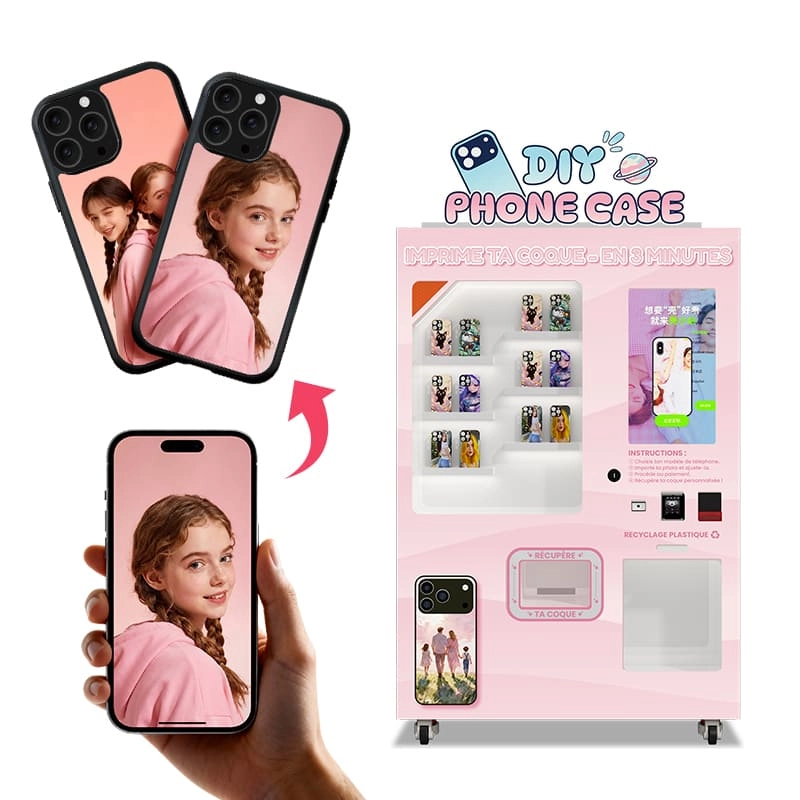
- Capitalize on the high-margin smart retail market with KeMore’s DIY phone case printing vending machine. This unmanned commercial UV printer kiosk provides an interactive self-service personalization experience, delivering custom protective covers in just 3 minutes. Equipped with an intelligent cloud backend for remote inventory monitoring and global payment integration, it’s a turnkey automated business solution for high-traffic malls, campuses, and transit hubs. Compatible with multi-model TPU+PC blanks, this on-demand printing station eliminates stock risks while maximizing ROI. Contact us for wholesale pricing and launch your passive income retail project today!
- •Smart APP Remote Management
- •3-Minute Fast Phone Case Printing
- •Self-Service Design & Payment
- •Automatic Printing and Dispensing
- •Multiple Phone Model Compatibility
- •24/7 After-Sales Support
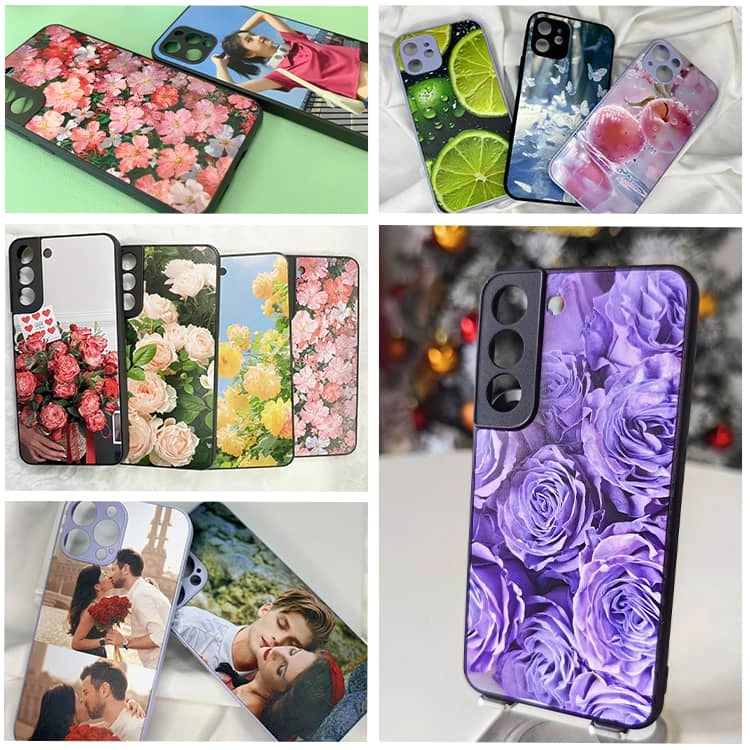
Maximize your custom retail potential with KeMore’s sublimation printable phone case blanks. Engineered specifically for UV flatbed printers and smart phone case vending machines, these premium blanks feature a durable TPU+PU composite material that delivers ultra-clear, fade-resistant custom DIY printing. Designed for popular iPhone and Samsung models, each protective cell phone cover offers certified shockproof protection, a raised lens frame for camera safety, and an anti-fingerprint matte finish. Available with magnetic ring options for MagSafe compatibility, these high-margin blank phone cases are the ultimate turnkey supply for on-demand personalization businesses.
Supplier’s Customization Ability
⦁ Minor customization
⦁ Drawing-based customization
⦁ Sample-based customization
⦁ Full customization
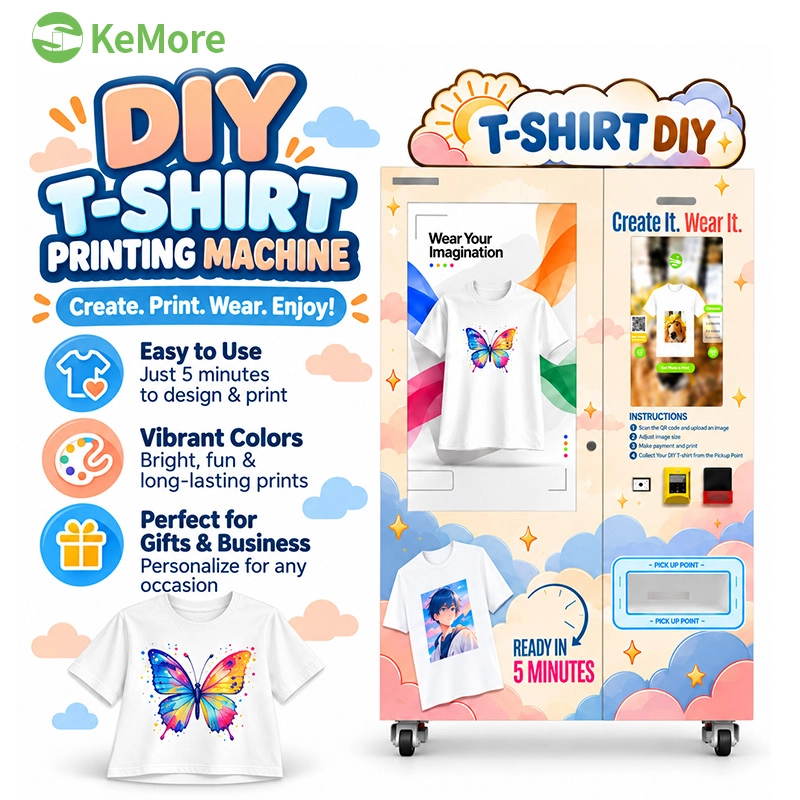
Capture the high-margin smart retail market with the KeMore DIY T-Shirt Printing Vending Machine (KP002). This innovative, unmanned smart kiosk features an interactive 27-inch touchscreen that delivers vibrant CMYK custom clothing prints on demand. Designed for high-traffic locations like malls and campuses, it boasts a massive 300–600 piece capacity, global payment integration (QR/Card/Cash), and an auto-clean function. Certified with UL and UKCA marks, this low-labor turnkey solution includes an intelligent cloud backend for remote monitoring and inventory tracking, making automated apparel personalization completely seamless.
Supplier’s Customization Ability
⦁ Minor customization
⦁ Drawing-based customization
⦁ Sample-based customization
⦁ Full customization
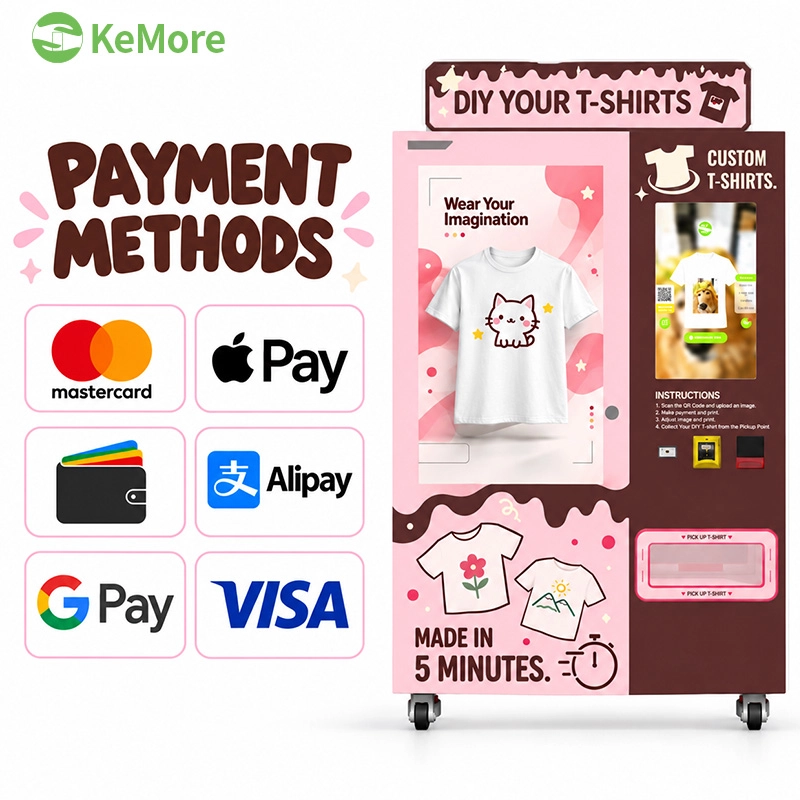
Capture the high-margin smart retail market with the KeMore DIY T-Shirt Printing Vending Machine (KP002). This innovative, unmanned smart kiosk features an interactive 27-inch touchscreen that delivers vibrant CMYK custom clothing prints on demand. Designed for high-traffic locations like malls and campuses, it boasts a massive 300–600 piece capacity, global payment integration (QR/Card/Cash), and an auto-clean function. Certified with UL and UKCA marks, this low-labor turnkey solution includes an intelligent cloud backend for remote monitoring and inventory tracking, making automated apparel personalization completely seamless.
Supplier’s Customization Ability
⦁ Minor customization
⦁ Drawing-based customization
⦁ Sample-based customization
⦁ Full customization
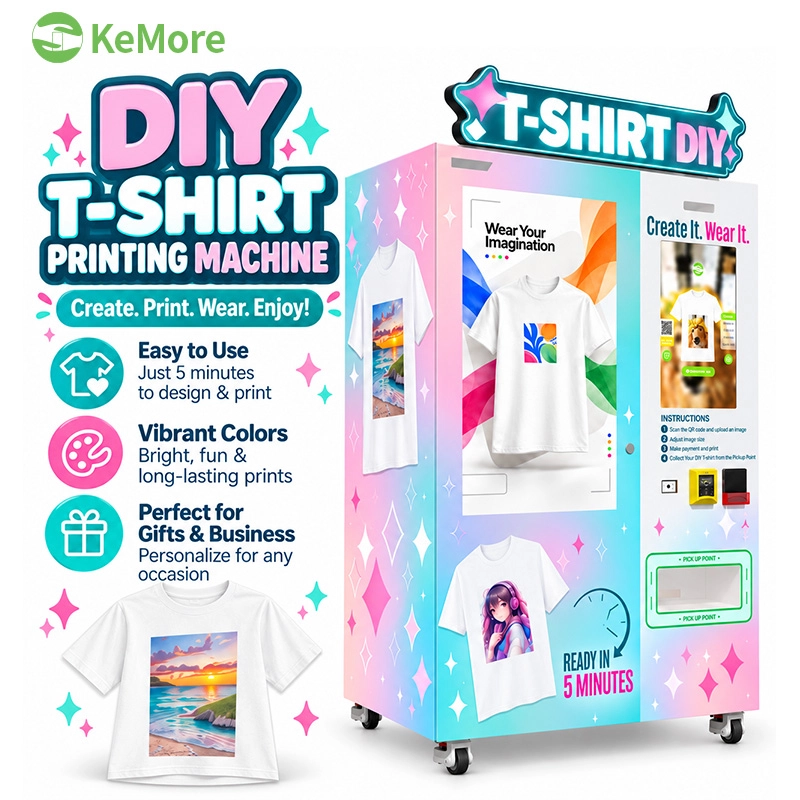
Capture the high-margin smart retail market with the KeMore DIY T-Shirt Printing Vending Machine (KP002). This innovative, unmanned smart kiosk features an interactive 27-inch touchscreen that delivers vibrant CMYK custom clothing prints on demand. Designed for high-traffic locations like malls and campuses, it boasts a massive 300–600 piece capacity, global payment integration (QR/Card/Cash), and an auto-clean function. Certified with UL and UKCA marks, this low-labor turnkey solution includes an intelligent cloud backend for remote monitoring and inventory tracking, making automated apparel personalization completely seamless.
Supplier’s Customization Ability
⦁ Minor customization
⦁ Drawing-based customization
⦁ Sample-based customization
⦁ Full customization
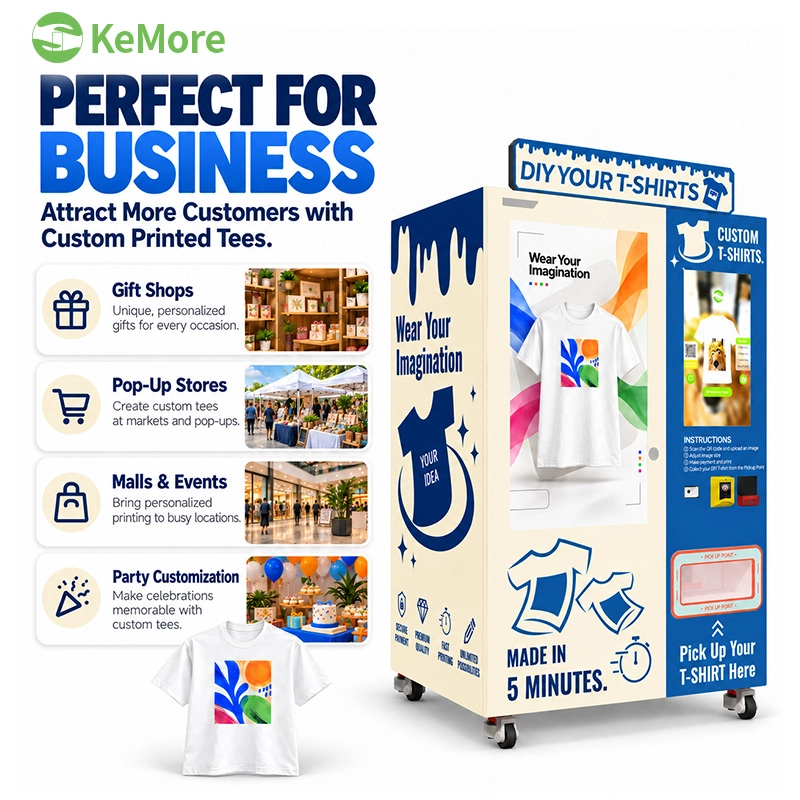
Capture the high-margin smart retail market with the KeMore DIY T-Shirt Printing Vending Machine (KP002). This innovative, unmanned smart kiosk features an interactive 27-inch touchscreen that delivers vibrant CMYK custom clothing prints on demand. Designed for high-traffic locations like malls and campuses, it boasts a massive 300–600 piece capacity, global payment integration (QR/Card/Cash), and an auto-clean function. Certified with UL and UKCA marks, this low-labor turnkey solution includes an intelligent cloud backend for remote monitoring and inventory tracking, making automated apparel personalization completely seamless.
Supplier’s Customization Ability
⦁ Minor customization
⦁ Drawing-based customization
⦁ Sample-based customization
⦁ Full customization
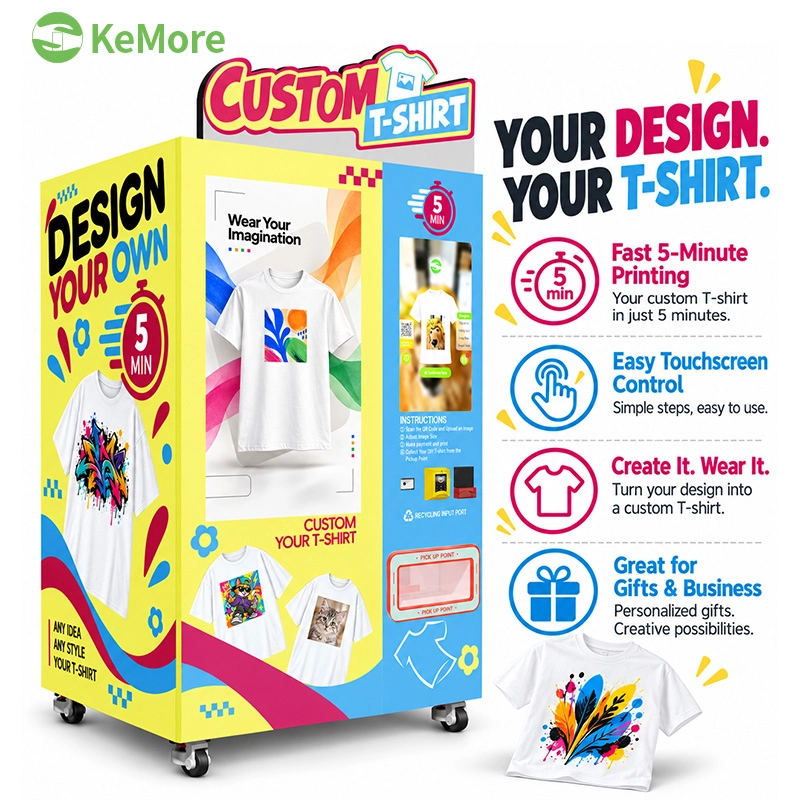
Capture the high-margin smart retail market with the KeMore DIY T-Shirt Printing Vending Machine (KP002). This innovative, unmanned smart kiosk features an interactive 27-inch touchscreen that delivers vibrant CMYK custom clothing prints on demand. Designed for high-traffic locations like malls and campuses, it boasts a massive 300–600 piece capacity, global payment integration (QR/Card/Cash), and an auto-clean function. Certified with UL and UKCA marks, this low-labor turnkey solution includes an intelligent cloud backend for remote monitoring and inventory tracking, making automated apparel personalization completely seamless.
Supplier’s Customization Ability
⦁ Minor customization
⦁ Drawing-based customization
⦁ Sample-based customization
⦁ Full customization
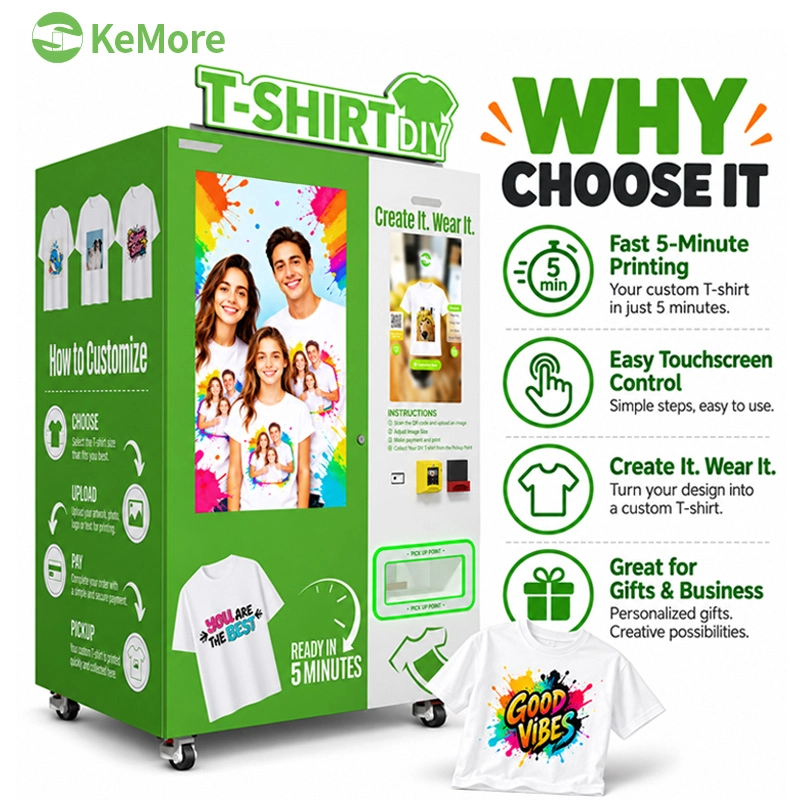
Capture the high-margin smart retail market with the KeMore DIY T-Shirt Printing Vending Machine (KP002). This innovative, unmanned smart kiosk features an interactive 27-inch touchscreen that delivers vibrant CMYK custom clothing prints on demand. Designed for high-traffic locations like malls and campuses, it boasts a massive 300–600 piece capacity, global payment integration (QR/Card/Cash), and an auto-clean function. Certified with UL and UKCA marks, this low-labor turnkey solution includes an intelligent cloud backend for remote monitoring and inventory tracking, making automated apparel personalization completely seamless.
Supplier’s Customization Ability
⦁ Minor customization
⦁ Drawing-based customization
⦁ Sample-based customization
⦁ Full customization
Let's Talk Business.
Get in Touch with us
If you have any comments or good suggestions, please leave us a message, later our professional staff will contact you as soon as possible.

Guangzhou Kexiaozhan Technology Co., Ltd.
we respond within a few hours
Monday–Friday, 9AM–6PM
+86 189 2573 7135
 No. 28 Xinhuan Village Road, Xinshuikeng Village, Dalong Street, Panyu District, Guangzhou City
Quick Links
Facebook
Instagram
LinkedIn
YouTube
Tik Tok